
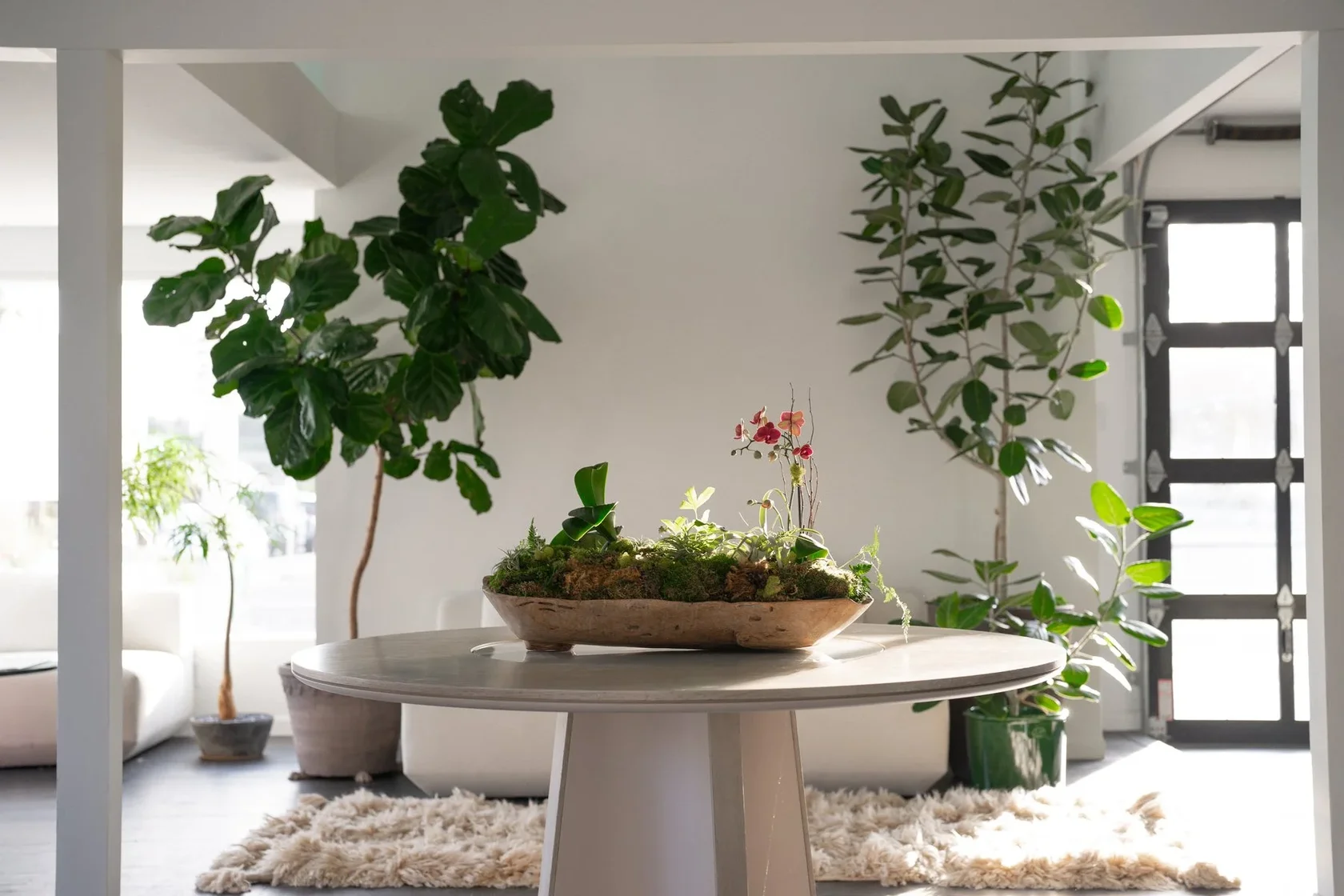
Indoor plants are easier to keep healthy when the room is evaluated before the plant is chosen. A plant that works in a bright showroom may struggle in a dim hallway three doors down, and better care later cannot fully compensate for a poor placement decision.
Planning first means fewer replacements later, and it takes less time than it seems: a walk through the space, a few honest questions, then the plant list. In order, that's light, size, foot traffic, who's actually watering it, and the container. Get those five right and the plant list gets much easier to narrow down.
Read the light before you pick a plant
Light is the first filter, and it's also the one people skip. Stand in the room at three points during the day: morning, midday, late afternoon. Note which windows are getting direct sun, which are getting reflected light off a wall or building, and which barely change from open shade to dim.
Direction is a shortcut, not a rule. North-facing windows give soft, consistent, low-intensity light all day. South-facing windows are the brightest and can run hot for anything sitting right in the sill. East gets a few hours of gentle morning sun; west gets a few hours of harsher afternoon sun. A room with no direct window light at all, lit only by overhead fixtures, is its own category and rules out most flowering plants regardless of what a tag promises.
Once the light is mapped, the plant choice gets simple: match it to what the room actually has.
Match the plant's mature size to the space
A six-inch plant in a nursery pot tells you almost nothing about what it becomes in three years. Check the mature height and spread before it goes anywhere near a corner, a doorway, or a spot under a light fixture. A plant that outgrows its ceiling clearance gets topped or crowded against the light, and either way it stops looking like a design choice and starts looking like a mistake nobody corrected.
Room scale matters as much as ceiling height: a single small plant in a large lobby reads as an afterthought, and an oversized plant crammed into a narrow reception desk reads as a squeeze. The plant should look like it was sized for the room on purpose.
Account for who actually walks through the space
A plant in a walkway gets brushed, bumped, and eventually knocked over, no matter how sturdy the pot looks in the store. Before placing anything, trace the actual paths people take through the room: the route from the door to the desk, the path around a conference table, the swing of a door. Plants belong in the dead space next to those paths.
High-traffic spots need either a plant that can take some contact and shrug it off, or a heavier, wider-based container that won't tip when someone's bag catches it. A tall, top-heavy plant in a narrow pot, placed right where people turn a corner, is a recurring problem waiting to happen.
Be honest about who's going to water it
In a home, responsibility for watering usually lands on one person by default, whether or not they signed up for it. In an office, the honest answer is often nobody, at least not on a fixed schedule. Watering becomes whoever remembers, whenever they remember, which is a plan that works for exactly the plants that tolerate being ignored.
Decide this before choosing anything: is there a real person committed to a real schedule, or does the plant selection need to account for inconsistent watering? Those are two different plant lists, and picking from the wrong one is why an office plant can look fine for six weeks and then stop. If a plant does start to struggle after installation, our guide to diagnosing office plant decline covers what to check first.
Plan drainage and containers before the plant goes in
Planting directly into a decorative container without drainage requires much tighter moisture control, because excess water has nowhere to escape. One practical setup is to keep the plant in a draining nursery or grow pot inside the decorative container, with a protected liner or reservoir system appropriate for the space.
It is much easier to solve the container and drainage setup before installation than to correct it after the plant is in place.
Build the care plan in from day one
The light, the size, the traffic pattern and the container are all decisions made once, at the start. Care is the only part of this that keeps happening, visit after visit, for as long as the plant is in the room. A plan that only accounts for the first day is only half a plan.
Whoever waters it, prunes it and catches problems early is doing the other half of the job the light-and-placement decisions set up.
Before you buy a single plant
- Light, checked at three points across the day
- Mature size, checked against the room, not the nursery pot
- Placement, out of the paths people actually walk
- Watering, matched to who's really going to do it
- Container and drainage, sorted before the plant goes in
- A care plan, not just a placement plan
When professional plantscaping makes sense
The complexity changes when a project moves from one or two plants to multiple rooms, light conditions and containers. A multi-room office, a lobby with different light on every wall, or a space that needs several planters sized and sourced before installation day is a different kind of project: more light conditions to map at once, more containers to choose and coordinate, and someone who needs to stay responsible for all of it after day one, not just during setup.
At that scale, a plantscaping team becomes useful: one point of contact for design, sourcing, installation and the ongoing care plan, instead of coordinating each piece separately. A recent example is Bristol Myers Squibb's newly consolidated San Diego research hub, where that same light-by-light, room-by-room planning applied across four floors at once.
Plant installations start at $2,000. Maintenance plans start at $250 a month, with final pricing based on plant count, visit frequency, site access and any corrective work identified during the walkthrough. See our office plant service →
About Plants for Friends
Plants for Friends designs, installs and maintains interior plants for commercial spaces and homes across San Diego County, Orange County and Los Angeles County. Every project starts with a walkthrough of the actual space, light, scale, traffic and access, before anything is chosen.
Since 2021, our team has completed more than 200 projects for clients including Toyota, Mercedes-Benz, JLL, Bristol Myers Squibb and ClickUp.
See our completed projects in the Plantfolio →From the blog
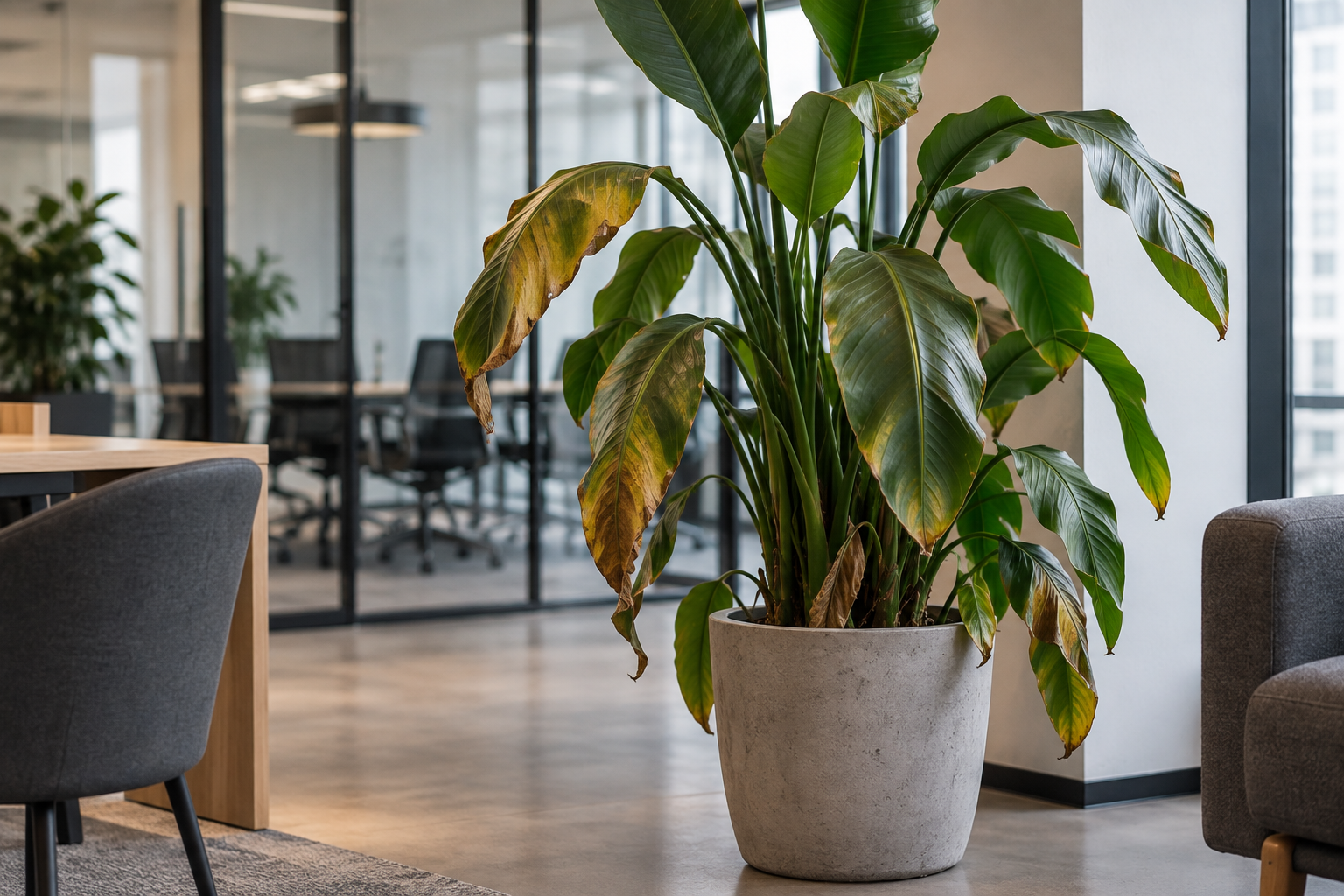
Guide
Why Are Office Plants Dying? (And How to Fix It)
A diagnostic guide for a plant that's already struggling: overwatering vs. underwatering, airflow and temperature, pests, and what's changed in the space, plus when to bring in maintenance.
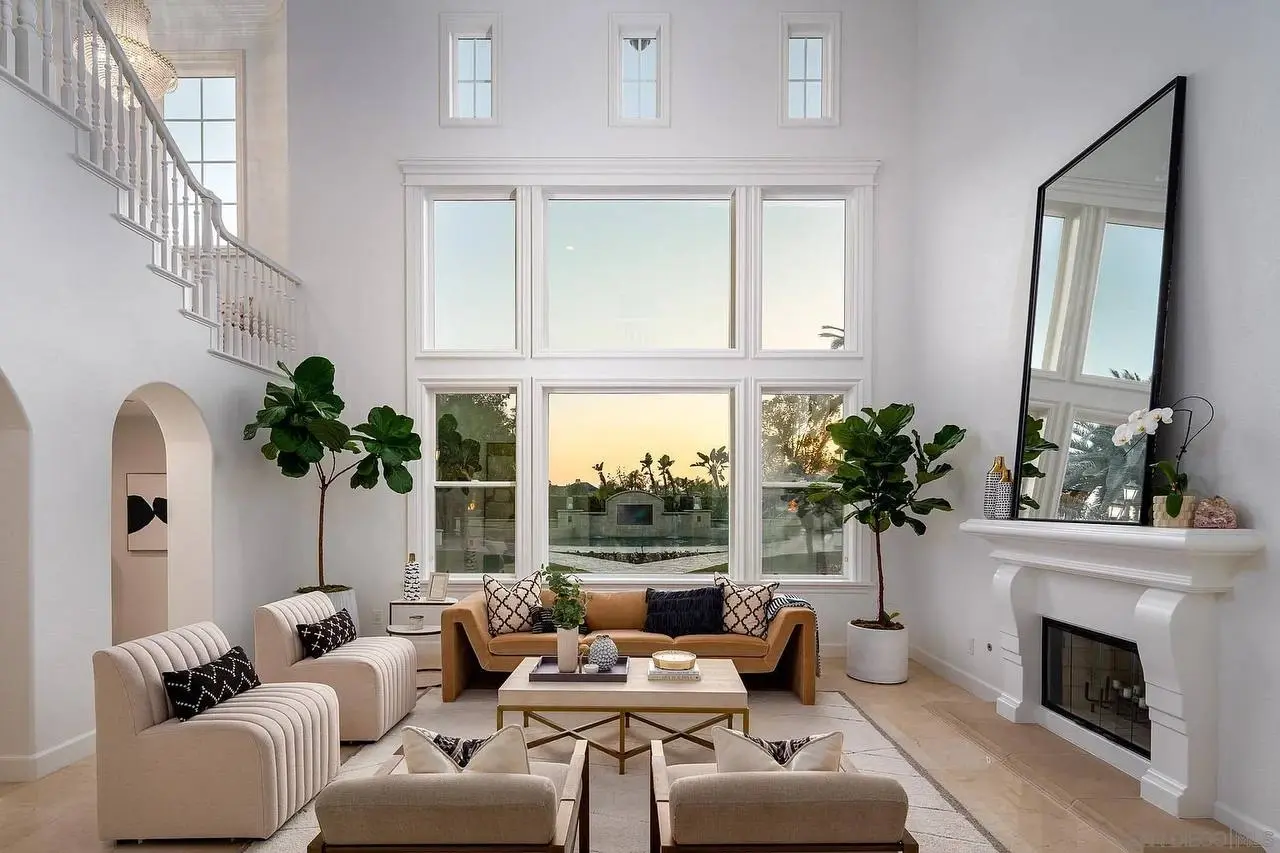
Residential
Real Plant Placements in San Diego Homes, and Why Each One Works
Real spots from recent residential work, what each one had to work with, and what solved it.