Plants for Bristol Myers Squibb's New San Diego Research Hub
Commercial · Case study
Plants for Bristol Myers Squibb’s New San Diego Research Hub
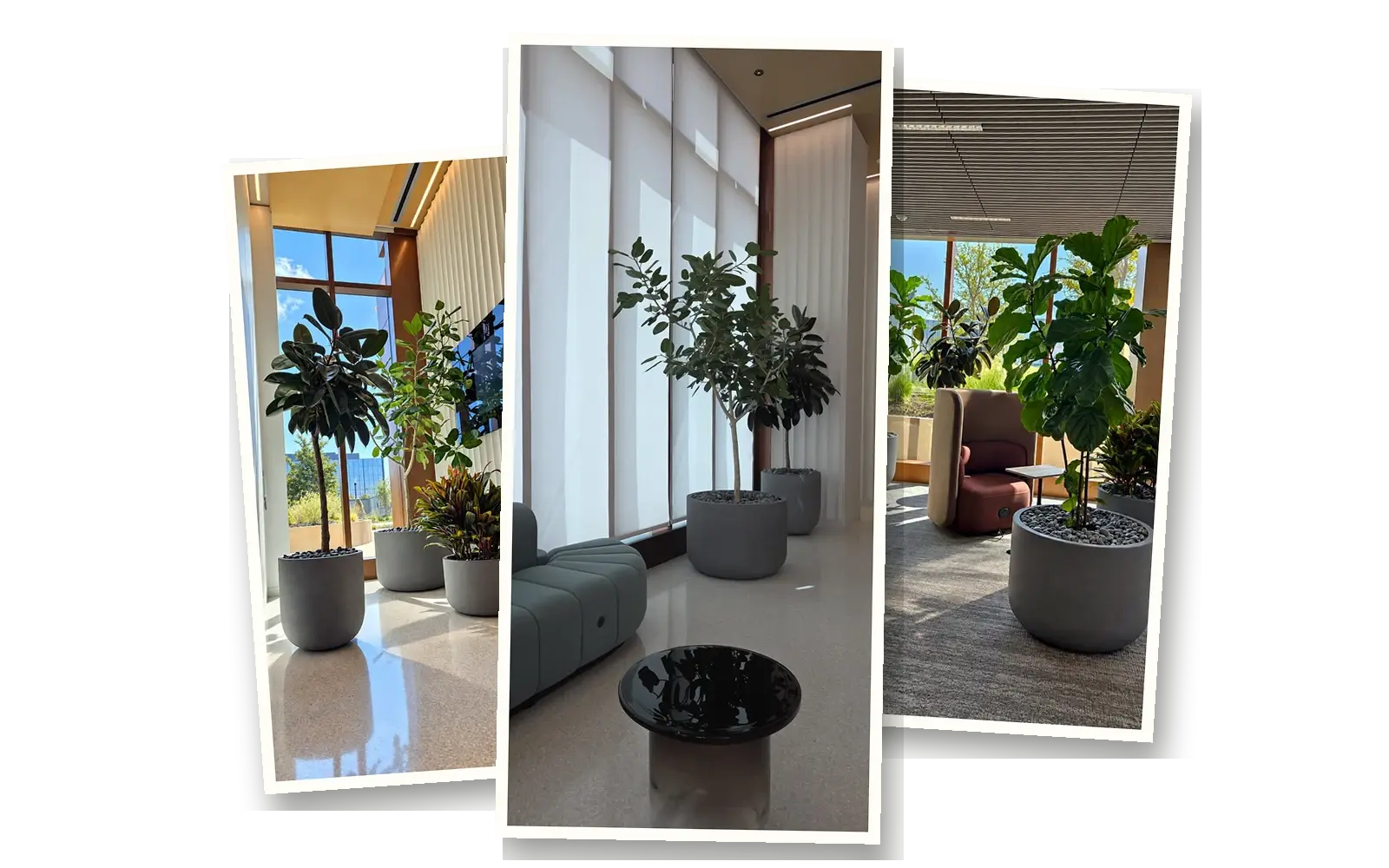
Some plantscaping projects begin after the interior is complete. This one began with the story of the building itself. Bristol Myers Squibb spent the last couple of years consolidating four separate San Diego offices and labs into one building: a 427,000-square-foot research hub at Campus Point, the Alexandria megacampus in La Jolla. We handled the interior plant design and installation for the new space.
For our latest project with Bristol Myers Squibb in San Diego, we spent months working alongside the design team. Every detail mattered: height, scale, shape, foliage color, planter selection, and even how the plants would relate to the artwork and atmosphere of each floor.
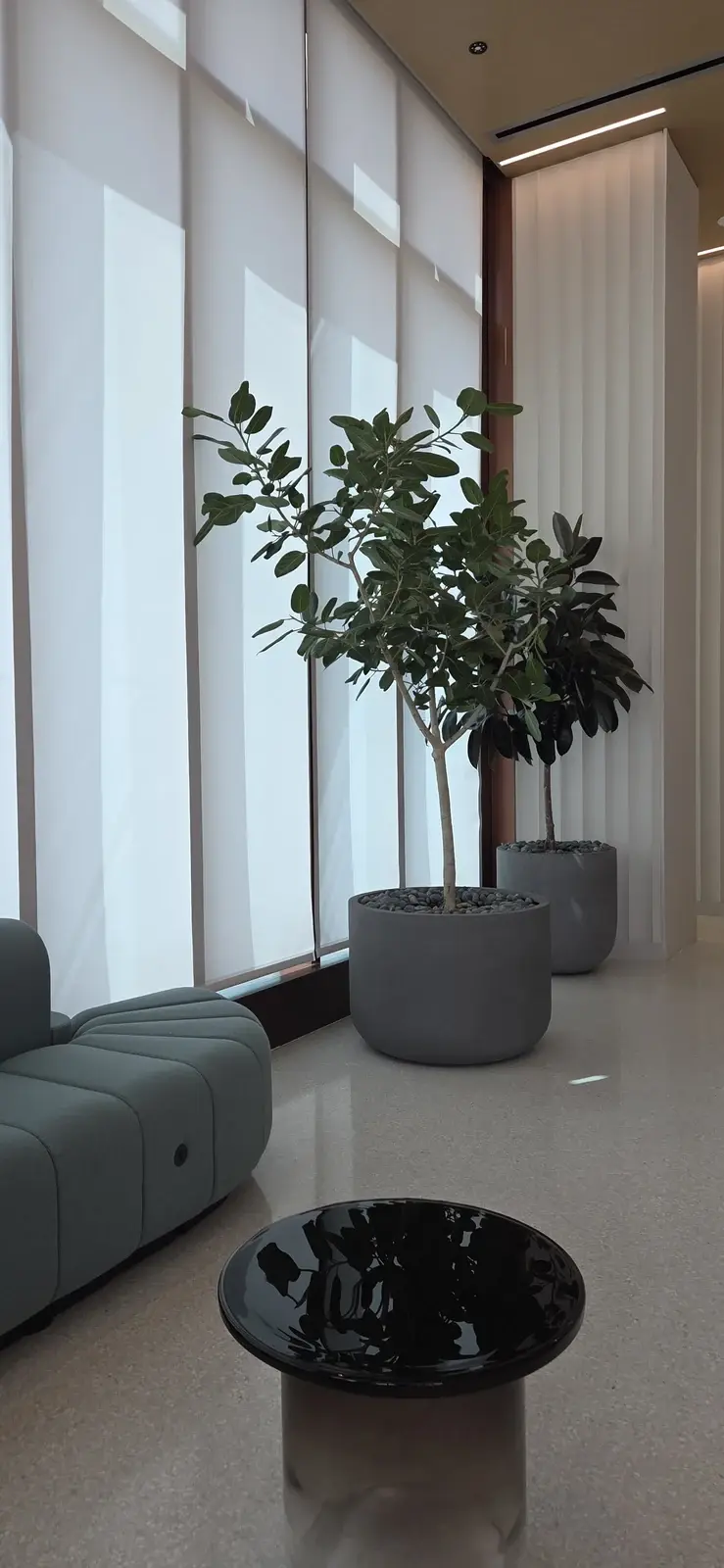
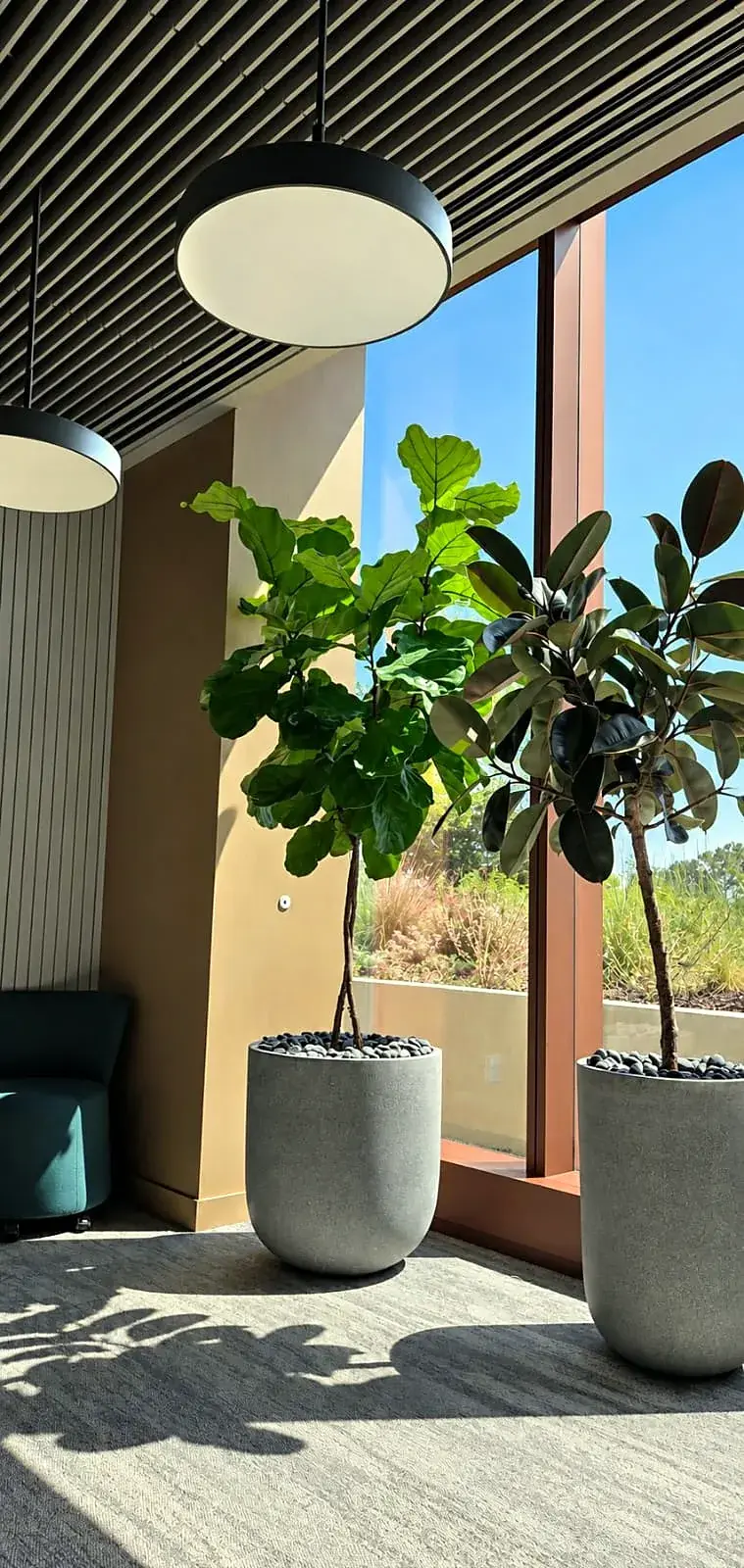
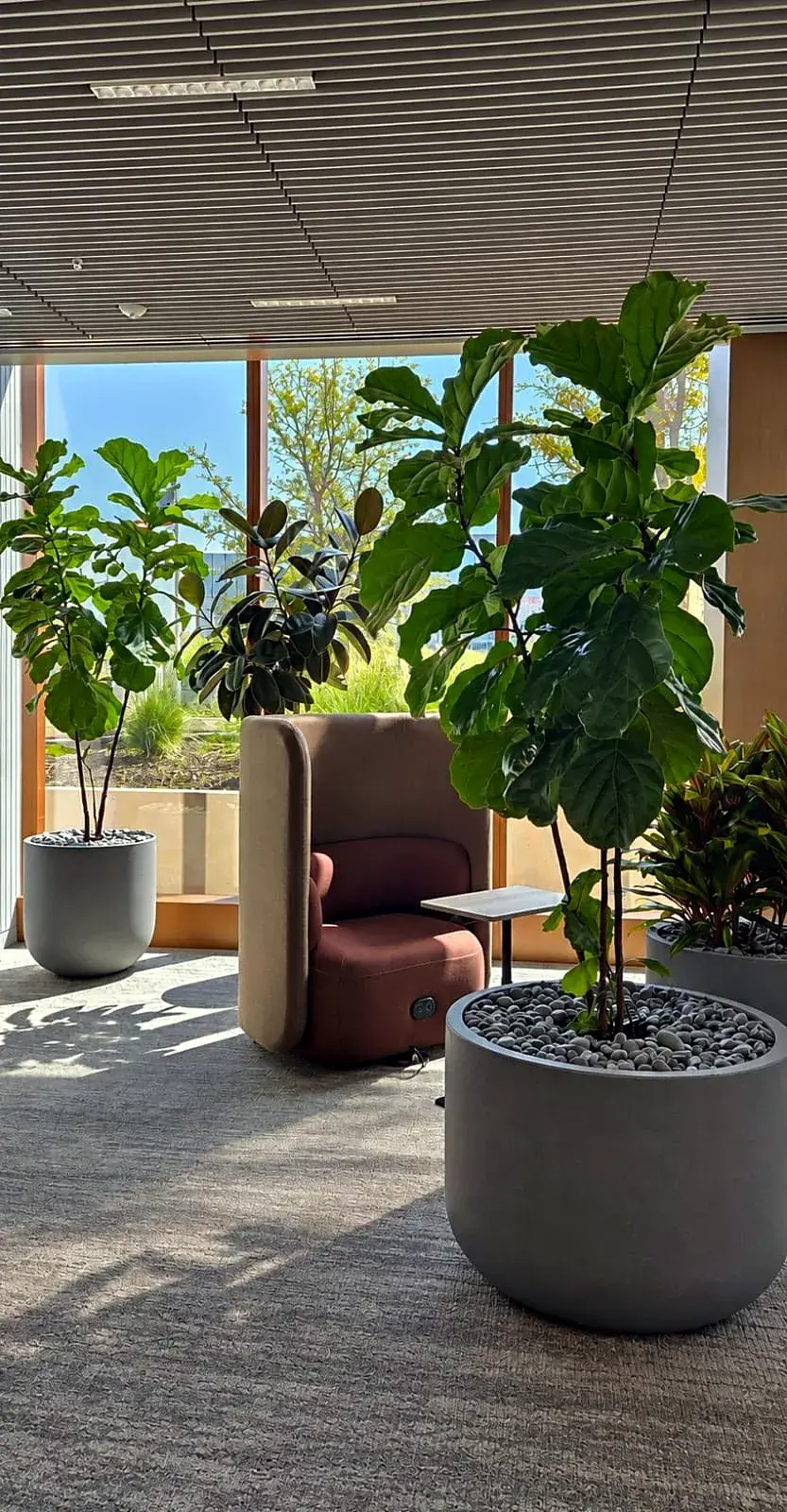
Bringing the San Diego landscape indoors
As you move upward through the building, the atmosphere evolves, from references to the ocean and coastline into beach landscapes and, eventually, greener environments. Our plants needed to follow that same journey.
That meant we deliberately moved away from creating a lush, tropical look. Instead, we focused on plant forms, colors, and silhouettes that felt more at home in Southern California.
Choosing plants for shape, not just species
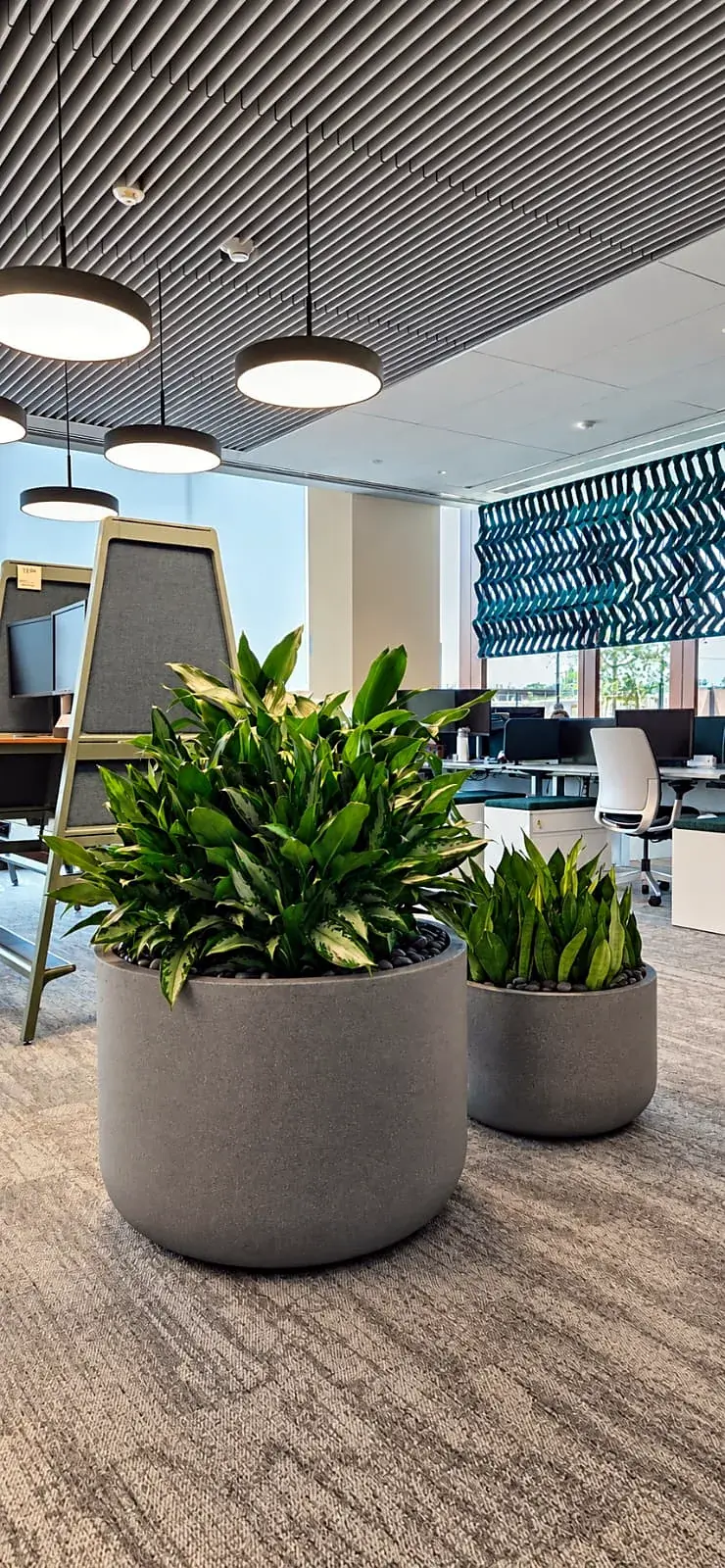
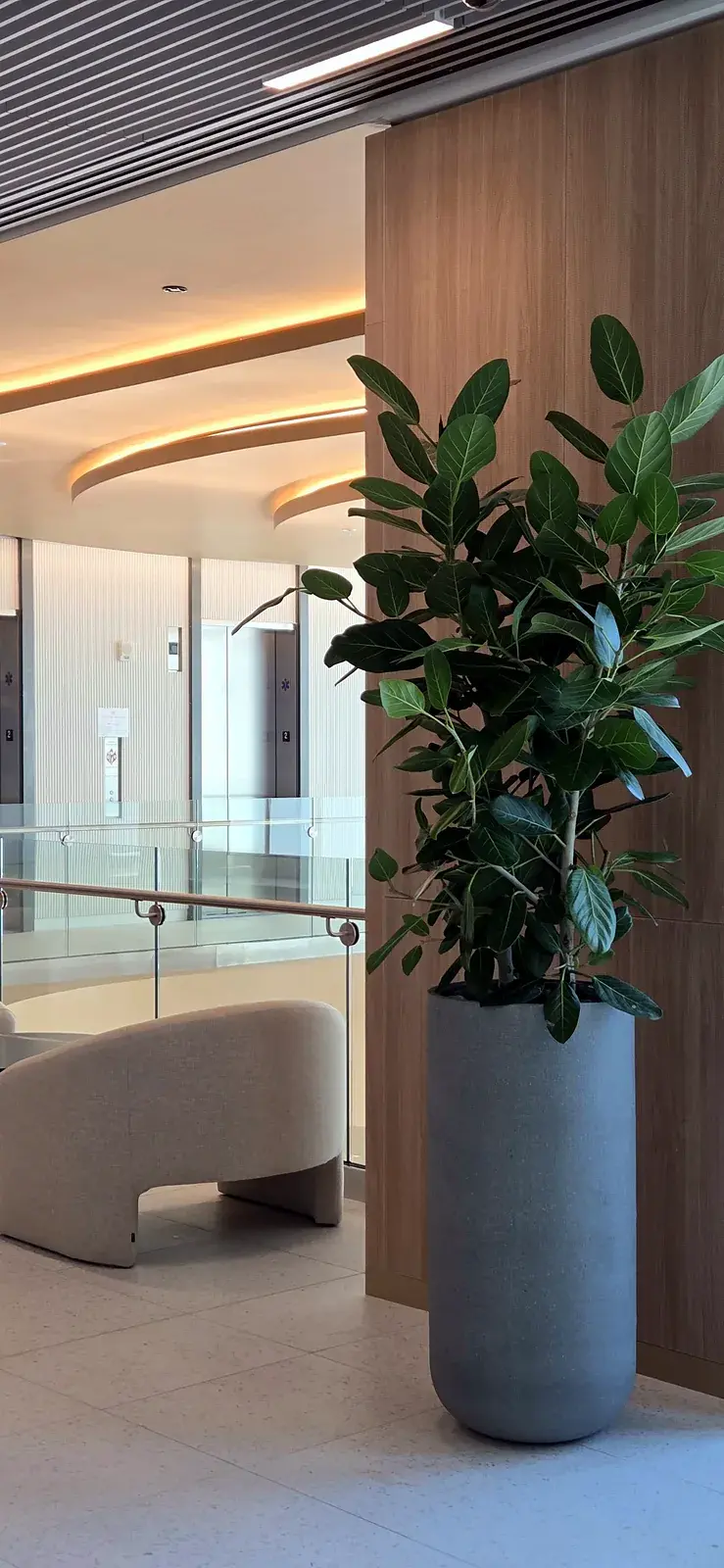
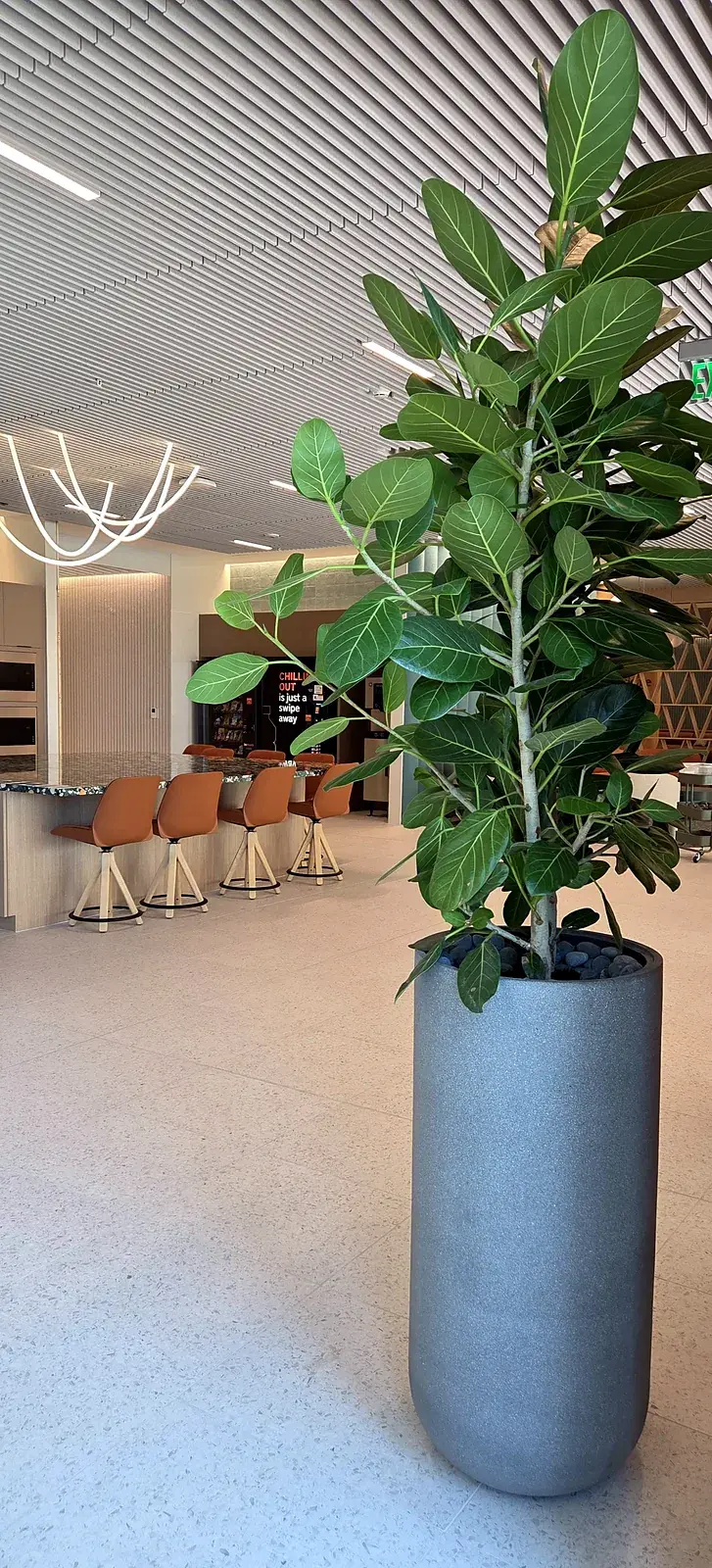
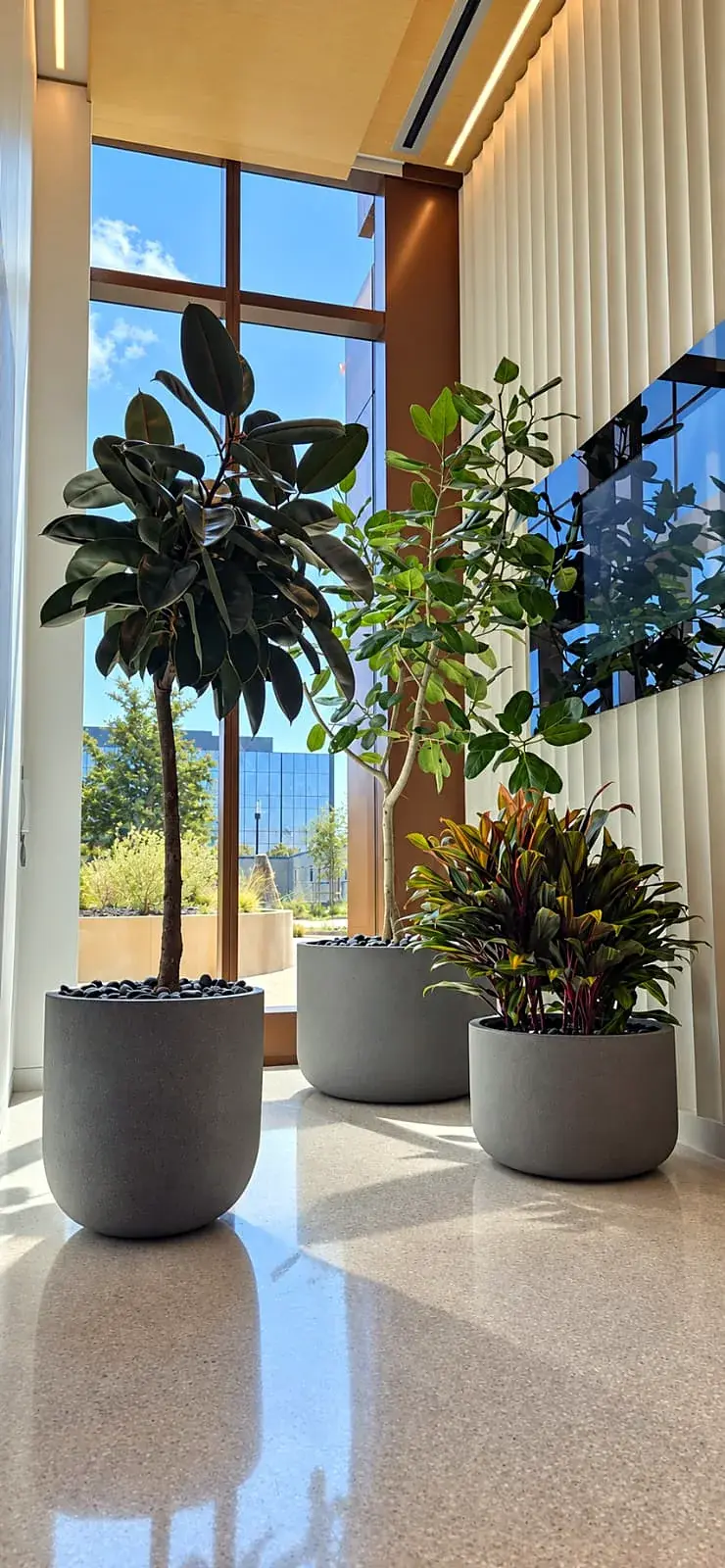
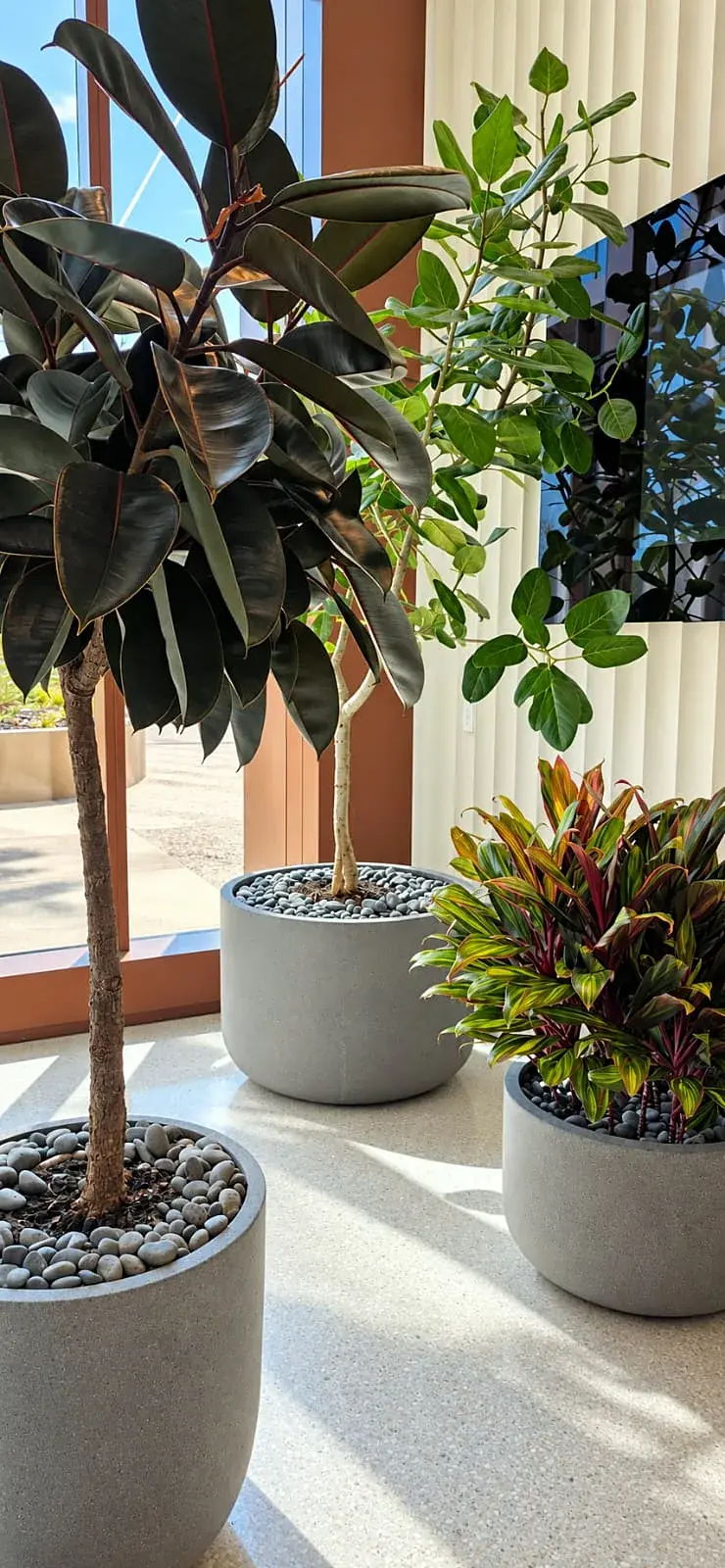
We used Dracaenas, for example, because their strong architectural form and pointed foliage can echo the shapes of agaves and other sculptural plants commonly associated with Southern California landscapes. We also incorporated different varieties of Ficus, whose branching structure and more natural tree-like forms worked beautifully in larger spaces.
Sansevieria moonshine turned out to be the workhorse of the plan: 64 of them, repeated through workstations and nooks across the building.
Rather than asking only “Which plant will survive here?”, we were also asking:
- What shape does this space need?
- How should the foliage interact with the architecture?
- Does this plant feel like it belongs in this part of San Diego’s landscape story?
Using foliage as part of the color palette
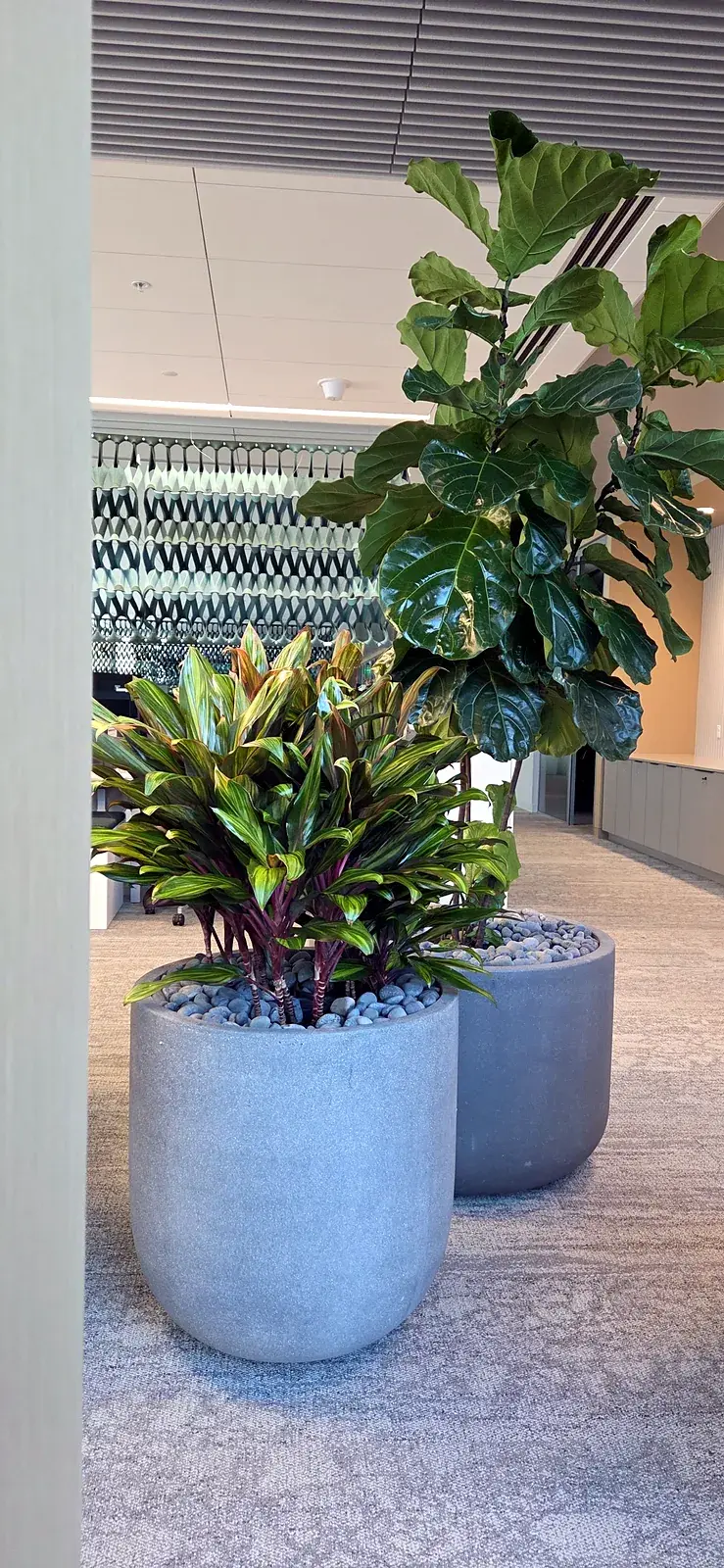
On the first floor, artwork introduced soft pink tones. We discussed how the plants could subtly pick up those colors through foliage rather than introducing an unrelated shade of green. On another floor, where the palette shifted toward deeper colors, we explored plants with more burgundy and purple tones.
We looked at the artwork, the finishes, the furniture and the sightlines. The plants had to feel like part of the original interior design, not something added after the fact.
Scale was just as important as color
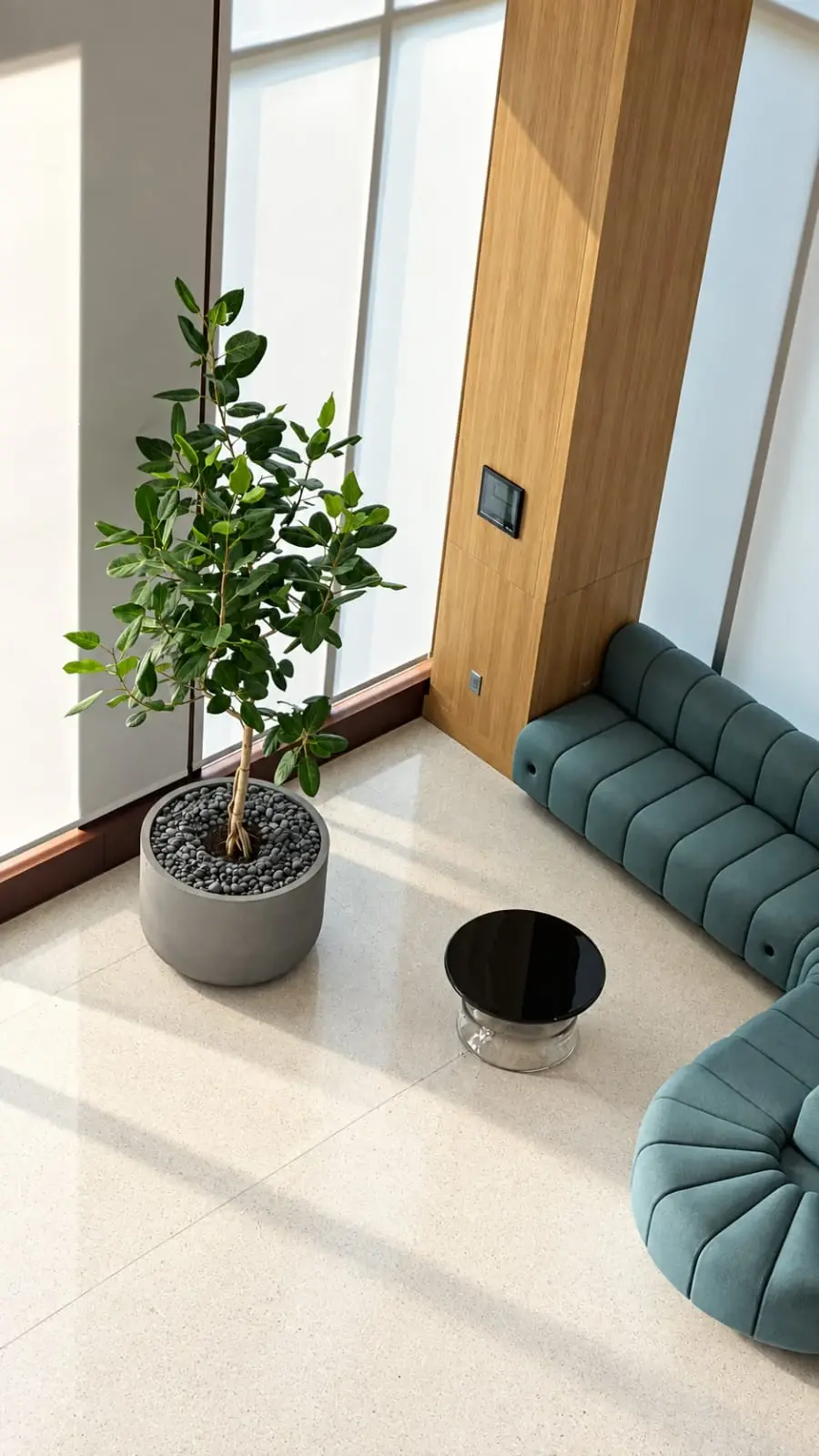
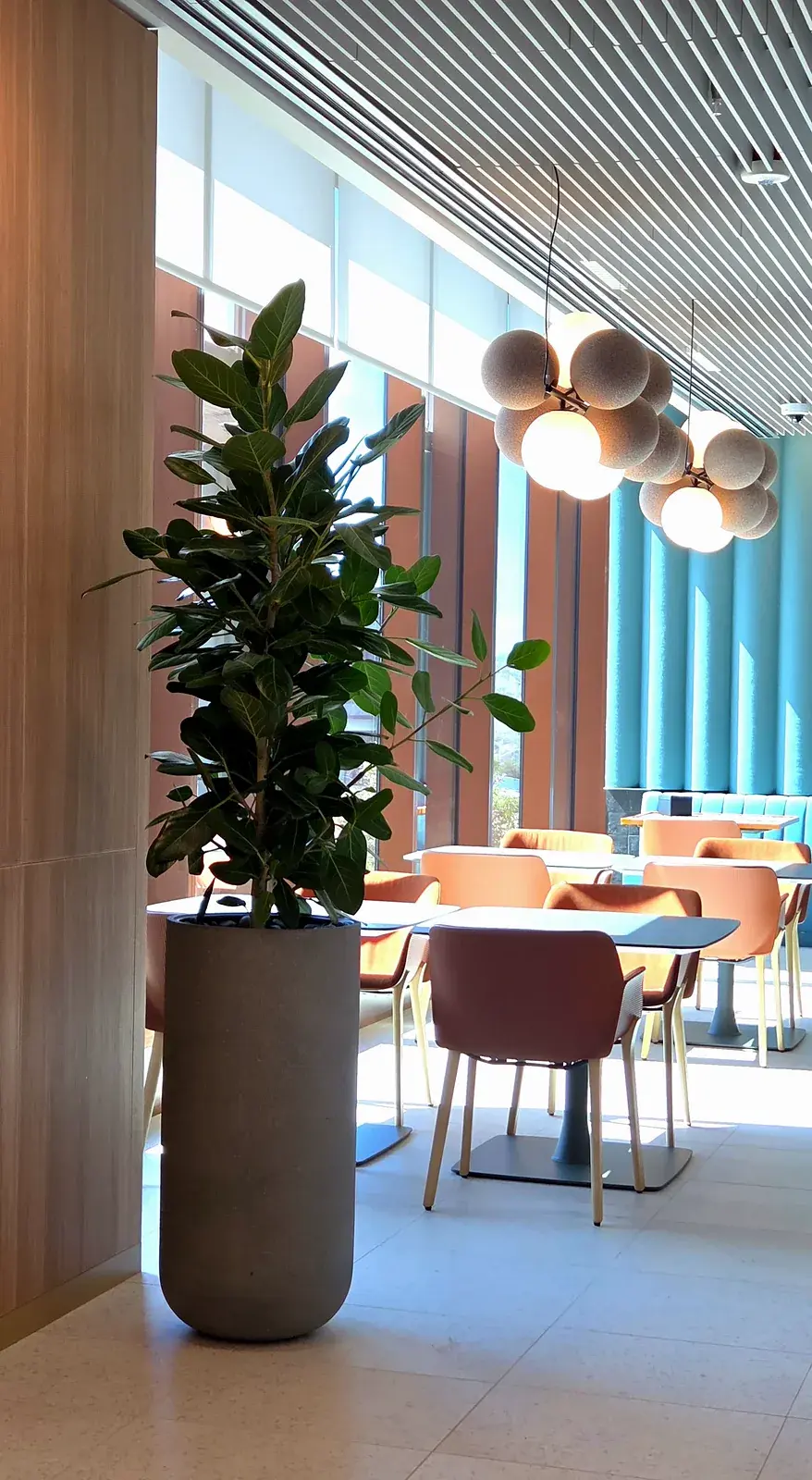
A specimen in a large open area needed enough height and canopy to hold its own within the architecture. In another location, an oversized plant could interrupt a view or compete with nearby artwork. Sometimes a difference of only a few feet completely changed the balance of the space.
When everything feels intentional
Someone walking through the building may never know how many discussions went into choosing one Dracaena instead of another. But they can feel when everything belongs together.
“Every plant has a reason for being there, and every decision ties the interior back to the landscape and character of San Diego.”
Plants for Friends designs, installs and maintains interior plants for offices, labs and hospitality spaces across San Diego County, Orange County and Los Angeles County. If your team is moving into a new space or finishing one out, see our commercial plant design work, or get in touch to start with a walkthrough of your own space.
About Plants for Friends
Plants for Friends designs, installs and maintains interior and exterior plants for homes and commercial spaces across San Diego County, Orange County and Los Angeles County. Every project starts with a walkthrough of the actual space, light, scale, traffic and access, before anything is chosen.
Since 2021, our team has completed more than 200 projects for clients including Toyota, Mercedes-Benz, JLL, Bristol Myers Squibb and ClickUp.
See more commercial projects →From the blog
Commercial
Auto Dealership Plant Service: Interior Plants for Showrooms, Lounges and Service Areas
How dealership showrooms, customer lounges and service reception use interior plants, and what it takes to keep them looking sharp under showroom lighting.
Guide
Why Are Office Plants Dying? (And How to Fix It)
The three real reasons office plants decline (overwatering, low light, nobody in charge) and when it's cheaper to hand it to a maintenance service.